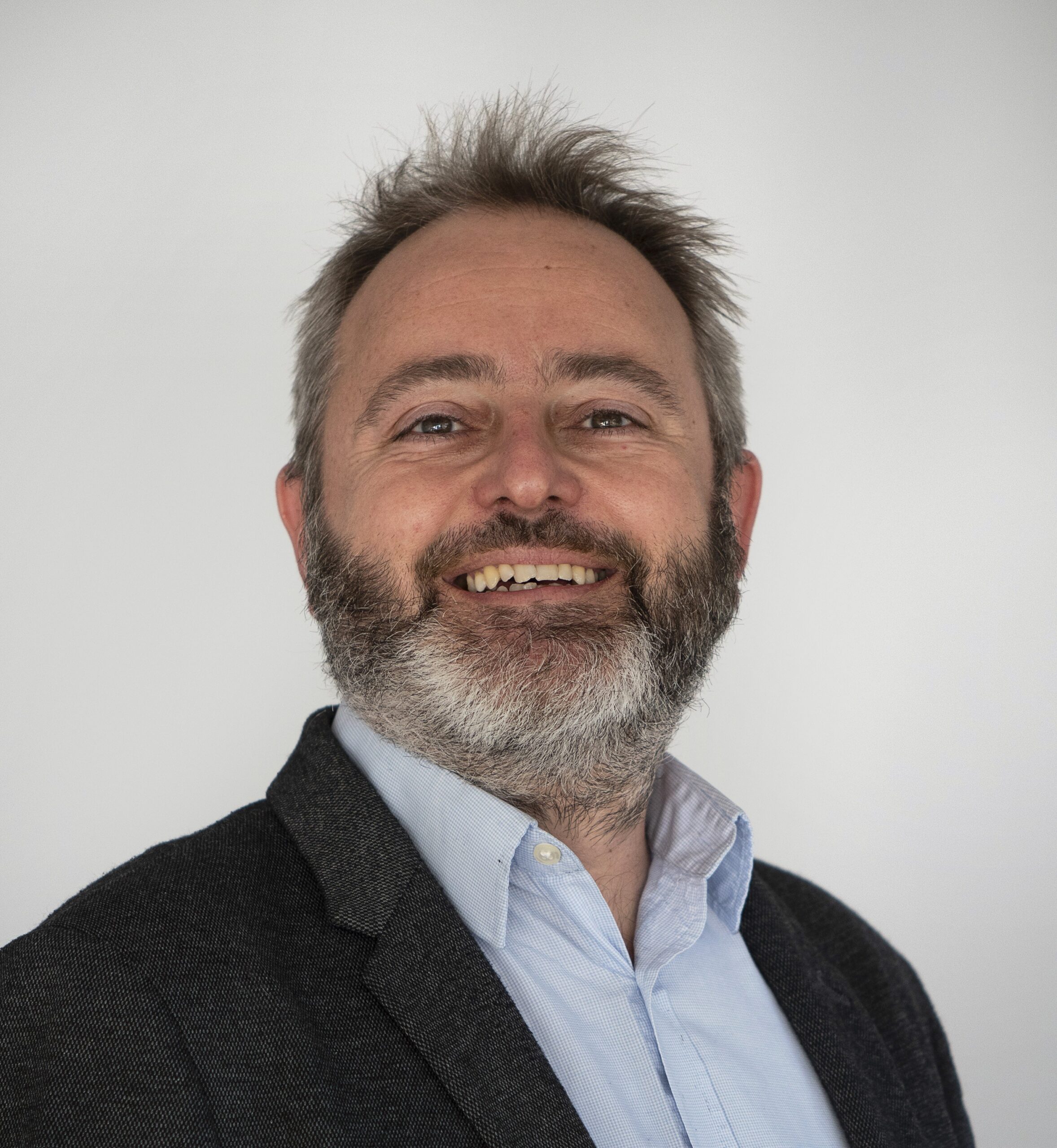
Dr James Georgalakis
Evidence and Learning Partnership was created by James to help organisations dedicated to the production, brokering and use of evidence to transform lives. He has over twenty years’ experience of successfully bridging the theory and practice of evidence informed policy and of fostering institutional strategies for more equitable and transformative research and policy innovation and impact. James was formerly the Director of Evidence and Impact at the Institute of Development Studies, Director of the UK Government’s Knowledge for Development and Diplomacy programme and Director of the European Social and Economic Research Council’s (ESRC) and UK Foreign Commonwealth Development Office’s (FCDO) Impact Initiative.
Check out James’ publications here
James’ guide to enhancing policy and practice with evidence
This lecture, originally recorded for an Institute of Development Studies (IDS) short course, sets out a comprehensive guide to the theory and practice of connecting evidence with policy. James takes you on a tour of the underlying theories and models, that over 40 years, have shaped understandings of what is meant by evidence, its relationship to change, and critical issues around whose knowledge counts. He goes on to give practical advice on frameworks for analysing the political economy of evidence use in your own context and examples of successful strategies from his own 25 year career as an evidence mobiliser.
Case Study: Mobilisation and use of knowledge from the global South
A project, led by James Georgalakis (Evidence and Learning Partnership) contributed to deeper understandings of how global development research funders can support research that is positioned for use, resulting in the International Development Research Centre (IDRC) piloting a new small grants mechanism to make it easier for researchers to collaborate with knowledge users to co-design research proposals.

The Project: IDRC teamed up with James whilst he was the Institute of Development Studies’ (IDS) Director of Evidence and Impact and with On Think Tanks to co-design something more innovative than a traditional evaluation or research study. Instead, the project was built as a “Learning Journey” that incorporated primary and secondary research and facilitated organisational learning. The project needed to build a more inclusive and diverse understanding of KT theories and practice and document the institutional models and roles of research organisations and programmes.
The Learning Journey: The team, jointly with IDRC’s Strategy, Evaluation and Learning Division (formerly the Policy and Evaluation Division), co-convened a Learning Journey (a series of accompanied learning sessions) over the 18-month project from January 2022 to July 2023. The Learning Journey challenged and reformulated the initial conceptual framework and further developed the research questions, helped identify research participants, and provided opportunities to share initial findings. This phased accompanied learning-based approach ensured that the analysis embraced a diversity of perspectives, and funder and researcher experiences. The overall aim was to explore understanding and awareness of how KT is actualised in the global South, and identify learning for research funders.
Literature Review: There has been a historic over-reliance on literature from the global North written in English in this field, and a persistent lack of attention to power and to the plurality and complexity of political contexts, sectors, knowledges and actors involved in KT. Given this situation, as well as possible differences in the applicability of findings originating from the global North to the global South, a trilingual literature search (in English, French and Spanish) and mapping was undertaken, which aimed to explore the literature in and from the global South. READ HERE
The primary research: The inquiry was framed broadly to ensure it covered the full spectrum of KT causal processes set out in the conceptual framework. Therefore interviews, surveys and case studies focused on KT defined broadly as: ‘processes involving intentional dialogue between a range of actors in order to support the use of research-based evidence to inform decisions and influence behaviours, policies, and practice’. Primary research consisted of qualitative data collection methods: (1) pulse survey; (2) key informant interviews; (3) case studies; (4) think pieces; and (5) sense-making sessions. It covered multiple regions in the global South and included participants from universities, think tanks and civil society.
The final report: It recommended that funders consider small grants or challenge funds that could be accessed by Southern researchers working in partnership with research users in policy or practice. Rather than treat KT as a standalone activity, give Southern research teams the chance to develop a proposal with their local partners that addresses a key policy or practice problem.
The key message: Funders should create more space for the co-production of research and change agendas and cease treating KT in isolation from broader issues and processes relating to equitable research partnerships, social movements, advocacy and governance.
Recommendation: Funders should take a more holistic approach to strengthening the capacity of multi-actor networks that have a common interest in solving a particular problem. Bilateral donors are in a unique position to broker relationships between their country missions or posts and regional offices, local researchers and knowledge intermediaries, governments, communities and global policy actors. READ HERE
The Impact: Deeper Understandings of How to Localize KT
The KT in the global South Learning Journey and research outputs have had a lasting effect on IDRC’s approach. While IDRC has long valued and supported research co-produced with intended users and developed tools to support this, the work prompted deeper consideration of practical ways that IDRC could resource the time and effort for Southern researchers and their collaborators in policy institutions to co-design action-oriented research. The project helped to highlight the value of broader definitions of KT with the key finding being that “the real challenge for KT in the global South is not one of translation at all, but of equitable co-production and sensemaking” Georgalakis, J. and Siregar, F. 2023 p.53.
The IDRC staff who participated in the learning journey were able to use the project to leverage internal awareness of this more holistic approach which in turn opened doors within the organisation and stimulated interest in the recommendation that funders “[create] more space for the co-production of research and change agendas” (ibid p.59)
Adapting funding processes to better enable researchers and knowledge users to work together
Over the next two years plans took shape and have resulted in thepiloting of an approach where each IDRC program division is “ringfencing” some funding specifically to support researchers and knowledge users in the global South to co-develop research proposals. IDRC is also working to roll out a simplified granting mechanism for this purpose.
The expected output from these small grants would be receipt of a co-designed research proposal for funding consideration. Importantly, the proposal would be co-designed and co-owned by the research teams (e.g., based in universities or think tanks) and actors that stand to benefit from the resulting evidence (e.g., partners in government, the public sector or civil society). As recommended by the KT in the global South reports and in line with the terms and conditions of IDRC grant agreements, the intellectual property resides with the architects of these initiatives who define their own criteria for the successful impact of the research according to the socio-cultural and political context they operate in. The hope is that IDRC could then fund the research project per normal practices, but if not, the proposal could still be shared with other funders.
This approach to commissioning and funding development research holds promise for more effectively embedding knowledge translation strategies in research investments and achieving intended outcomes.
“The study clearly underscores that the real challenge for KT is not one of translation but of equitable co-production and sensemaking. It argues that funders should create more space for the co-production of research and change agendas. At IDRC, we are taking this recommendation seriously. We are considering how to leverage the programming and granting mechanisms at our disposal to better engage knowledge users in research processes, and we’re collaborating with other funders to learn from their experience.”
Kristin Corbett, International Development Research Centre